Choosing a project car
How to Choose a Project Car for Restoration
The best project car is not necessarily the best-preserved car. It is the car whose condition matches what you actually want to build.
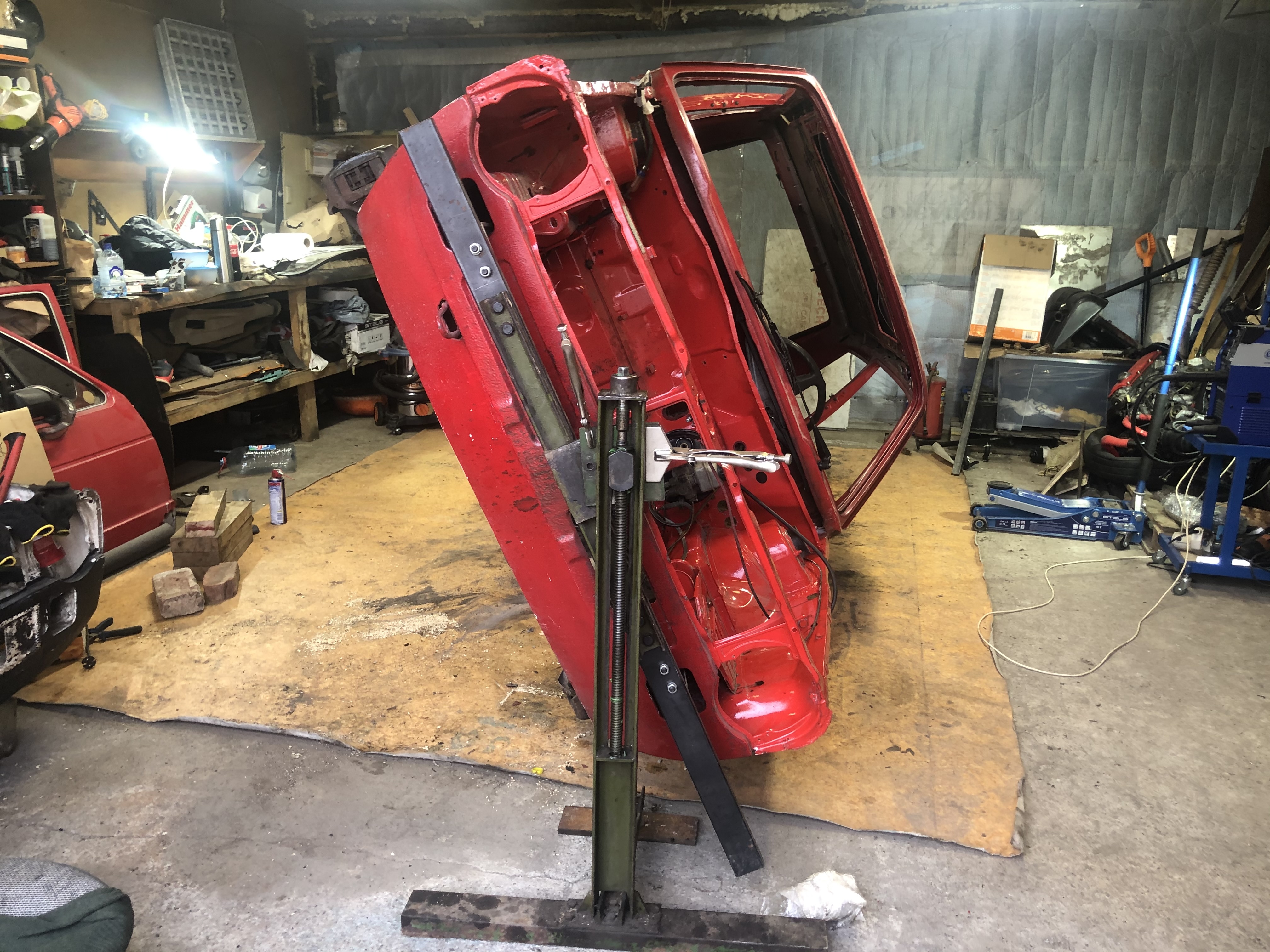
How to choose a car for restoration: body condition, completeness, rust, originality, rare parts, color changes, modifications, and buying an already restored car.
When choosing a car for a restoration project, it seems logical to look for the best example your budget allows. The better preserved the car is, the less rust, previous repair work, and missing parts you are likely to deal with. A good survivor is easier to disassemble, understand, and return to a high standard.
But there is a paradox: the better preserved the car is, the harder it becomes to change anything. Repainting it in a non-original color, adding reinforcement, or modifying part of its structure feels much easier when the starting point is already tired and heavily used.
That is why the best project car is not necessarily the best-preserved car. It is the car whose condition matches what you actually want to build.
First, decide what kind of car you want to end up with
There is a big difference between preserving a car, restoring it to factory specification, and building a restomod or simply a car tailored to your own taste. If your goal is to return it as closely as possible to the condition in which it left the factory, a strong original body is a huge advantage.
Every original panel, bracket, seam, interior part, and piece of hardware that survives is something you do not need to recreate or search for later. But if you already know you want a different color, modern suspension, structural reinforcement, or major interior changes, an exceptionally original car can become a limitation.
A rougher car gives you more freedom. If a sill is already completely rotten and has to be cut out anyway, adding carefully designed reinforcement during the repair is an easier decision. Drilling out factory spot welds on a perfectly intact original sill purely to make the structure stronger is a very different proposition.
Think about this before you buy: a car can be perfect for preservation but wrong for the project you actually had in mind.
The body is the most important part
An engine can be rebuilt. A gearbox can be repaired. Suspension, brakes, wiring, and most mechanical systems can be restored or replaced. The body is different: it is the foundation of the entire car, and body repairs rarely stop at one panel.
A rusty sill is often not just a rusty sill. You remove the outer section and discover damage to the inner structure, then the edge of the floor, the jacking point, and the bottom of the pillar. Suddenly, one repair turns into an entire section of the body.
One repair very quickly leads to another. Often, you have to repair the surrounding structure first just to create the correct reference points and somewhere solid for the new panel to attach. Eventually, it becomes difficult to tell where one repair ends and the next begins.
A good original body is difficult to reproduce, even with excellent restoration work
A properly restored body can absolutely be strong and durable. But even a very high-quality restoration does not fully reproduce the conditions of factory production. At the factory, corrosion protection is applied before final assembly; later cars can receive treatments designed to protect seams, edges, and internal cavities.
During restoration, metal is cut, ground, and welded, and factory protection around the repair area is inevitably damaged. Afterwards, those areas can and should be protected with primers, seam sealers, cavity wax, and other materials, but reproducing the complete industrial treatment of an entire body shell in a workshop is difficult.
That does not mean a welded body is automatically a bad body. It means that good original metal has value of its own. A car with tired paint but a largely untouched original structure can be a much better starting point than a freshly painted car with a long history of unknown body repairs.
With a very poor body, you may end up repairing almost everything
If the shell is badly affected by rust, you need to understand what kind of project you are taking on. The body is one connected structure: the sill connects to the floor and pillars, the wheel arch to the inner arch and quarter panel, and corrosion around a window opening may continue deep underneath seals and outer panels.
During a full restoration, you often cannot simply replace one damaged component. First you repair what is next to it, then the structure that the next part attaches to, then another area so that the geometry can be established correctly.
The more of the body has been dismantled and the more original metal has disappeared, the more important repair sequence and reference points become. If you enjoy welding, fabrication, and reconstructing bodywork, this may be exactly the project you want. If you mainly want to rebuild the mechanical systems and start driving, a severely rotten shell can turn the project into something completely different from what you expected.
A full restoration can also give you an opportunity to improve the structure
If a structural section has to be completely rebuilt anyway, you have an opportunity to improve it. The Golf Mk1 is a useful example: its Cabriolet version used additional body reinforcement to compensate for the lack of a fixed roof. If the sills and related structures on a regular Golf are already beyond repair, it can make sense to study stronger factory variants.
The same logic can apply to stronger jacking points, additional pillar reinforcement, or carefully designed side-impact beams in the doors. Structural modifications should not be approached as “thicker steel must be better”; any reinforcement needs to be thought through properly.
There is a major difference between improving a section you already have to rebuild and cutting into an excellent original shell purely to modify it. A full restoration reduces originality, but it also gives you a certain amount of freedom.
On rare cars, completeness can be almost as important as the body
The rarer the car, the more carefully you should look at small details. Major missing components are easy to account for before purchase. The real trouble is often dozens of small pieces that initially seem unimportant.
One missing clip, switch surround, bracket, piece of seat trim, air vent, window-mechanism part, or small section of exterior trim does not look like much on its own. But when there are dozens of these things, especially on a rare car, the situation changes.
The value of a part is no longer determined by how much plastic or steel is in it, but by how many examples still exist. Small parts tend to disappear when donor cars are dismantled, so somebody restoring the same model twenty years later may spend months searching for something that originally cost almost nothing. A complete car can therefore justify a significant premium.
Originality can become a limitation of its own
Color is where this becomes especially obvious. My Golf Mk1 still has factory stickers showing its paint code and specification, and in hidden areas you can still see its original silver. The paint has faded from decades of sunlight and age, and I find the color a little boring — yet I still find it difficult to decide on a color change.
Rationally, a full repaint is the perfect moment to choose something more interesting. Emotionally, covering up a surviving original specification with a completely different color is much harder. If the shell had already been repainted several times, the decision would probably be much easier.
A well-preserved car makes you more cautious by itself. This is how the condition of the starting car can begin to dictate the direction of the entire project.
If you change the color, look at the past first
If you do decide to repaint an old car in a non-original color, start by looking at manufacturer color palettes from the period. The shade does not have to come from your exact model: look at other models from the same manufacturer, other brands, or nearby model years. The important thing is to understand the visual language of the era.
Modern fashionable colors can look excellent on a classic body, but trends change quickly and a restoration can easily take several years. A color that feels extremely current at the beginning may already feel dated before the car is back on the road.
Mustard yellows, warm beiges, muted greens, and unusual blues from past decades already belong to the visual character of those periods. For a restomod, this can be a good compromise: the car is not completely original, but it still looks like a version that could plausibly have existed in its own era.
What about buying a car that has already been restored?
Instead of buying a project, you can buy a finished car — and this is where you need to be especially careful. The phrase “fully restored” means almost nothing on its own.
A car may genuinely have been completely stripped, repaired properly, aligned correctly, protected internally, and rebuilt using good parts. Or the visible rusty areas may have been patched, the rest hidden under sealant and fresh paint, and the interior made to look presentable. From the outside, both cars may look equally impressive.
Claims about restoration should be treated with skepticism. Evidence matters much more: photographs from before and during the bodywork, information about the workshop, invoices, a list of work performed, and photographs of internal structures before they were closed with new panels. Fresh paint shows the final result; it tells you almost nothing about what is underneath.
What to ask the seller for
- photos of the car before restoration
- photos of internal structures during the work
- invoices and a list of work performed
- workshop and materials information
If you want to keep the car for life, building it yourself may make more sense
If you are buying a car not for a few years but potentially for the rest of your life, there is a strong argument for starting with your own project. You will know the history of every major repair. That does not mean you need to perform all the work yourself: you can choose a workshop or specialist you trust and follow the entire process together.
You will know where metal was replaced, which parts were used, how the geometry was restored, how cavities were protected, and what compromises were made along the way. Such a car has one major advantage: you know what is under the paint.
You will almost never recover the full cost of a quality restoration
Bodywork and full restoration are extremely expensive. Welding, preparation, paint, mechanical work, interior work, seals, hardware, chrome, trim, and hundreds of small parts gradually add up to a very large number.
Unless you are dealing with a genuinely rare and valuable collector car, you should not expect to recover all of that money when you sell. Buyers compare the finished car with other cars on the market; they do not reimburse you for every restoration invoice.
Money spent restoring a classic car should primarily be treated as money spent on yourself: you are paying for the right color, a body condition you understand, the parts you want, and the quality of work that satisfies you.
A good restored car can sometimes be the cheapest option
If you find a car that was genuinely restored to a high standard, has detailed documentation, and is close to the car you would have built yourself, even a high asking price may represent good value. The previous owner has already paid for a significant part of the restoration for you.
A properly restored car for €25,000 can be cheaper than buying a €10,000 project and trying to bring it to the same standard yourself. If the process and control over every detail matter to you, starting with a project makes sense. If you mainly want a good classic car to drive, a professionally restored and well-documented example may be the more rational choice.
So what is the best car to buy for a project?
There is no universal answer. For a factory-style restoration, the best surviving body you can find is usually a huge advantage. For a custom build, a structurally good but cosmetically tired car may be a much better starting point.
For somebody who specifically enjoys rebuilding bodywork, even a very poor shell can be the right choice. If your main goal is simply to own and drive a good classic car, a high-quality, well-documented restoration may actually be the cheapest option of all.
The most important thing is to understand this before you buy. The condition of the starting car determines much more than the initial budget: it determines what you will spend the next several years doing, how much freedom you will have during the build, and what kind of car you will eventually end up with.
Questions to ask before buying
- Do I want to preserve the car, or do I already know I want to modify it?
- How much do I actually enjoy bodywork, and am I prepared to spend years repairing the structure?
- Are replacement body panels available, and how complete is the car?
- How difficult will missing interior and trim parts be to find?
- Do I want the building process itself, or mainly the finished result?
- If the project becomes two or three times larger than expected, will I still want to finish it?
Real Stepwise examples
Public pages with real project photos, stages, tasks and related work for the same vehicle.
-
Volkswagen Golf Mk1 public restoration projects
A public subject page grouping several projects for the same car.
-
Volkswagen Golf Mk1 dashboard panel project
Another project connected to the same vehicle.
-
Volkswagen Golf Mk1 mirrors project
A smaller completed project for the same car.