Car restoration
How to plan a car restoration when the plan keeps changing
At the start you can outline the work, but the real scope often becomes clear only after teardown and inspection.
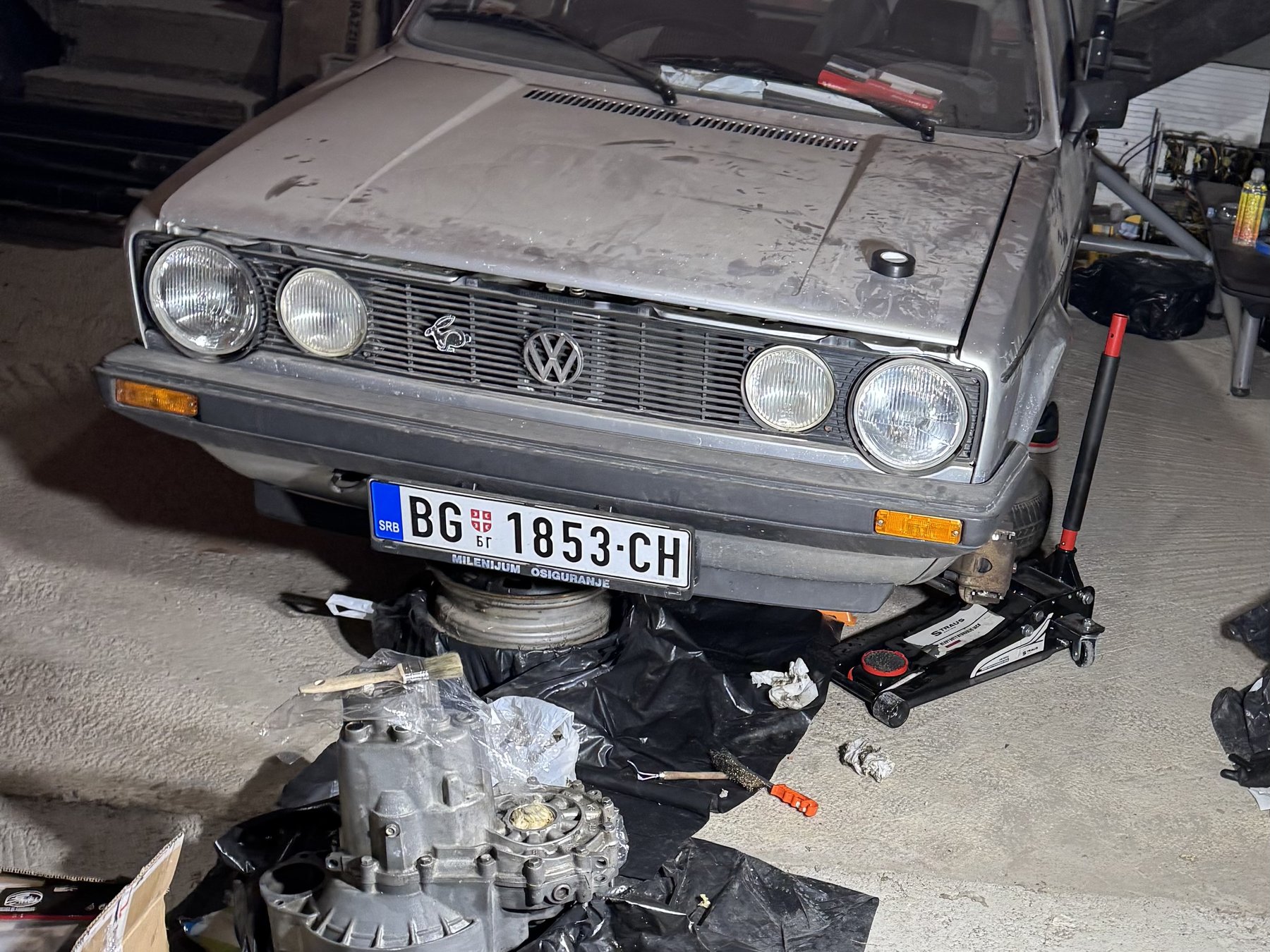
Using a Golf Mk1 as an example: how to update a restoration plan after teardown, evaluate new work and keep the history of completed stages.
Before a restoration starts, it helps to record the car's starting point, the desired result, the budget range and a rough order of work. But even a good first plan will not reveal everything hidden inside the assemblies.
While the car is still together, part of the damage is invisible. After teardown you get inspection results, extra jobs and parts waiting time. Sometimes a new part does not fit; sometimes a problem appears only during reassembly.
So the restoration plan has to be updated regularly. The goal is not to guess everything on day one, but to keep the link between the original intent, new findings, decisions and finished work.
Why the full scope appears only after teardown
Many parts cannot be judged until an assembly is removed, cleaned and opened. That is why the first estimate almost always changes after inspection.
At the same time the workshop fills with removed assemblies, fasteners, parts to restore, orders and outside work. Some actions block reassembly, while others can continue in parallel.
In that situation a simple next-task list is not enough. You need to know which assembly each finding belongs to, what blocks it and which other jobs it affects.
How one job pulled several others behind it
This example comes from a front-wheel-drive Golf Mk1 restoration. The initial task was simple: replace the clutch.
To reach it, the gearbox had to come out. On this car that meant freeing the driveshafts and disconnecting a steering tie-rod end.
Inspection showed that the removed driveshafts were worth rebuilding too. The needed part arrived and did not fit. The next one did not fit either. The right part appeared only on the third attempt.
In parallel it became clear that the gearbox mounts also needed attention: press out the old bushings, blast and paint the brackets, then press new bushings in.
The fasteners from the removed assemblies were cleaned up at the same time, while access was easy.
During reassembly another issue appeared with the tie-rod end nut, which had been disconnected to remove the driveshaft. That created one more unplanned job.
A clear task turned into a small project with parallel work, dependencies and waiting for parts. That pattern is common, but every expansion should still be judged separately: does it need to happen now, does it block assembly, and what does it do to time and budget?
How one task became a chain
- removed the gearbox
- freed the driveshafts
- added driveshaft rebuilding after inspection
- ran into wrong parts
- added mount and fastener restoration
- found another job during reassembly
Experience reduces surprises, but it does not replace records
An experienced restorer knows the weak points of a model, understands the teardown sequence and spots possible extra work earlier.
But a long restoration still accumulates decisions, orders, measurements, rework and completed jobs. After a few months it is hard to rebuild that story from memory and phone photos alone.
Records are not a substitute for experience. They preserve how that experience was applied in this exact project: what was found, why a decision was made and what it led to next.
Completed work helps keep a sense of progress
These records matter for more than memory. A long restoration has a psychological trap: after another teardown, the list of new work can grow faster than the list of completed work.
Photos of the starting point, completed stages and decision notes show how much the car has changed and how much work is truly behind you.
When finished jobs stay inside the project, a new finding does not feel like going back to zero. The future tasks sit next to the path already travelled.
Record not only the result, but also the reason: what you found, which options you considered and why you chose one.
Real Stepwise examples
Public pages with real project photos, stages, tasks and related work for the same vehicle.
-
Volkswagen Golf Mk1 public restoration projects
A public subject page grouping several projects for the same car.
-
Volkswagen Golf Mk1 gearbox maintenance project
A complete public project with phases, tasks, photos and parts.